
India took another leap in space infrastructure with the foundation stone laid for a new launch pad at the country's second rocket port in Kulasekarapattinam.

Budget 2026 sticks to fiscal discipline, shuns populist measures despite five key state elections coming up, but ends up rattling stock markets with a higher transaction tax on derivatives trading.

The government is close to approving a proposal by Micron Technology to set up an assembly, testing, marking and packaging (ATMP) facility in the country involving an investment of about $1 billion. The world's fifth largest semiconductor company, based in Idaho, USA, will use the facility to process some of its own wafers, manufactured across the globe.

Prime Minister Narendra Modi's call to make this decade a "techade" for India and the push for 5G, semiconductors and transformation through digital services is going to boost the technology sector in the country, industry players said on Monday. Modi, in his speech on the 76th Independence Day, touched upon all-round development of technology in the country, from 5G to push for electronic chips, laying of optical fibre cable (OFC) network across villages and enablement of digital entrepreneurship in villages through Common Services Centres, making the present decade as "techade" for India. Homegrown mobile devices maker Lava International's Chairman and Managing Director Hari Om Rai said electronics and technology sectors create about $4 trillion of revenue.

'Grassroots-level corruption, which disrupts the last-mile work, cannot be ignored in your enthusiasm and drive to get going to complete the project.' 'Like it was in MGNREGA, in some states, it is the case with the Jal Jeevan mission.' 'The last minute levels of corruption can ruin the intent of the project itself.' 'When you see that people can game a particular well-intended and well-crafted project, you need to correct that.'

Despite all the noise around India's chance to leverage the China-plus one strategy, India's share of global foreign direct investment (FDI) inflows fell from 3.5 per cent in the first nine months of 2022 to 2.19 per cent in the same period in 2023, according to OECD data. The sharp drop of 54 per cent is much steeper than the overall global FDI inflow decline of 26 per cent in the first nine months. FDI inflows to China have fallen dramatically from a share of 12.5 per cent in the first nine months of 2022 to only 1.7 per cent in the same period in 2023.

'We kept this Budget on a larger plank, rather than on one incident, however serious.'

The Union Budget for 2026-27, presented by Finance Minister (FM) Nirmala Sitharaman on Sunday, which was a first, had an excellent domestic macro backdrop. According to the first advance estimates, gross domestic product (GDP) in constant prices is projected to grow 7.4 per cent in the current financial year, against 6.5 per cent in 2024-25.

Union telecom minister Jyotiraditya Scindia on Tuesday said investment in India at present makes economic sense for every original equipment manufacturer, as he cited the example of US smart devices major Apple's decision to source majority of the iPhones sold in the US from the country. While speaking at the Bharat Telecom event, Scindia said the investment in India at present is not just an act of goodwill alone but it makes economic sense for every OEM (original equipment manufacturer).

Prices of televisions are expected to rise by 3-4 per cent from January next year on account of the rising cost of memory chips and depreciation of the rupee, which recently crossed the 90-to-a-dollar mark for the first time.

India has become Apple's main export hub to the US, which consumes over $40 billion worth of iPhones annually.

The United States action of levying 25 per cent additional tariff on Indian goods is 'unfair, unjustified and unreasonable', India said on Wednesday in a firm reaction, signalling increasing tensions between the two strategic partners over New Delhi's energy ties with Moscow.

Artificial Intelligence, innovation and next-generation technologies figured prominently during the high-stakes discussion between Prime Minister Narendra Modi and US President Donald Trump at the White House, as the two sides announced transformative measures, including the US-India TRUST initiative, roadmap on accelerating AI infrastructure and INDUS Innovation, to boost tech ties.

This was perhaps a missed opportunity for India to spotlight a core domestic challenge: The scale of workforce preparation required for a young, populous, rapidly growing country seeking to reach net zero, points out Radha Roy Biswas.

'For those in for the long haul, this is a God-given opportunity.' 'Your market is falling despite strong fundamentals, and such a clear roadmap has been announced.'
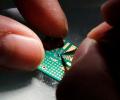
The Union Cabinet on Wednesday approved a Rs 76,000 crore policy boost for semiconductor and display manufacturing ecosystem in the country in an bid to position India as a global hub for hi-tech production. Announcing the decision of the Cabinet, IT and Telecom Minister Ashwini Vaishnaw observed that electronics plays an important role in everyday life, and semiconductor chips forms a crucial part of electronics. Outlining the details of the scheme, he said the Rs 76,000 crore programme has been approved for the development of semiconductors and display manufacturing ecosystem.

The escalating trade war between the US and China is expected to benefit Indian exporters in increasing their shipments to the American market, according to experts. Federation of Indian Export Organisations (PTI) President S C Ralhan said that imposition of higher tariffs by the US on China will shift demand towards India, which exported goods worth Rs 86 billion to the US in 2024-25.
'This Budget has a one-year agenda, which you can call the sprint, and the marathon is towards Viksit Bharat.'

Two modules published by the NCERT, Swadeshi: Vocal for Local (for middle stage) and Swadeshi: For a Self-Reliant India (for secondary stage), carry excerpts from the prime minister's Independence Day address in which he stressed that self-reliance would drive India's journey towards a Viksit Bharat.

Who else will take on the might of Microsoft, Google, and Amazon if not the Adanis, Ambanis, Birlas, or Tatas?, asks R Jagannathan.
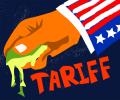
US President Donald Trump on Wednesday slapped an additional 25 per cent tariff on goods coming from India as penalty for New Delhi's continued buying of Russian oil.

UK and Indian semiconductor industries share potential synergies in the areas of design, device and applications, according to a study by the India Semiconductor Association, a trade body representing the Indian semiconductor industry, the UK Trade & Investment, and Science & Innovation Network UK. ISA president Poornima Shenoy said, "ISA is focused on business support to its members and the Indian semicon community."

India is all set to make its presence felt in the $47 billion global outsourced semiconductor testing and packaging market, an arena where Malaysia and Vietnam have been way ahead so far. The Cabinet last Thursday cleared two projects, the Tata's assembly testing and packaging plant (ATMP) and the Murugappa-owned CG Power with Renesas from Japan as its tech partner. These, together with Micron's assembly and testing plant which is already being constructed in Sanad in Gujarat, will collectively invest Rs 47,300 crore to set up the factories.

'India did not surrender. That was why he wanted to pressurise India by this 25% tariffs.'

The exit of Larsen & Toubro (L&T) from the Hyderabad Metro is a long-term positive for the stock. It could be a bullish trigger, alongside higher international orders, and new opportunities in segments like defence and data centres.

From labelling India the 'Tariff King' to slapping sweeping import duties, US President Donald Trump has steadily hardened his trade stance on India. These announcements are being seen as a pressure tactic to get New Delhi to agree to demands made by the US in the proposed Bilateral Trade Agreement (BTA).

...compared with 153,000 in all of 2024.

iPhone maker Apple has met its replenishment target for freshwater withdrawals for corporate operations in India in 2023, the company said in its environmental progress report released on Wednesday. Globally, Apple has set a goal to replenish 100 per cent of corporate freshwater withdrawals in high-stress locations by 2030.

'Despite being a software powerhouse, we're not producing proportionate original IP, frameworks, or global tech products originating in India.'

rediffGURU Chocko Valliappa offers crucial career advice to engineering aspirants.

Finance Minister Nirmala Sitharaman on Monday held a meeting with representatives of the semiconductor industry of the US and invited them to make further investments in India. The finance minister spoke about opportunities for companies situated in Silicon Valley and about the government of India's commitment to be a reliable player in the entire semiconductor value chain with dedicated incentive for the sector in mission mode through the Indian Semiconductor Mission. Last year, the government approved a Rs 76,000-crore scheme to boost semiconductor and display manufacturing in the country in a bid to position India as a global hub for hi-tech production, and attract large chip makers.
'I think that kind of change is coming. We should stay prepared for that change, whichever industry or sector we are in, we must be prepared.'
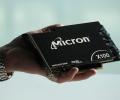
US-based chipmaker Micron Technology is expecting demand for semiconductors to rise significantly in the next few years, globally and in India, as memory consumption is going up, largely driven by the widespread adoption of technologies like artificial intelligence (AI). "Memory consumption is expected to double by the end of the decade and the biggest driver in this is AI. "While it's natural to talk about compute and GPUs (graphics processing units) in the context of AI, it is not to be forgotten that the true enabler for AI is memory ... in all the AI engines that we talk about, there is a lot of need to access memory quickly," Anand Ramamoorthy, managing director, Micron Technology India, told Business Standard.
US President Donald Trump's announcement of 25 per cent tariff on all goods coming from India starting August 1, plus an unspecified penalty, is expected to impact Apple's plans to expand iPhone manufacturing in India as well as export of other electronics to the US. The move comes at a time when Indian electronics production is reeling under pressure due to restrictions imposed by China on supply of several critical components, capital goods and even skilled technology professionals.

Here's what Indian investors diversifying into equities, ETFs, and real estate abroad to manage risk, returns, and currency exposure must watch out for.
The government on Tuesday notified the Rs 22,919 crore scheme to promote domestic manufacturing of electronics components, display and camera modules, non-surface mount devices, multi-layer printed circuit boards and lithium-ion cells for digital applications, among others. The scheme is likely to be operationalised in the next 2-3 weeks.

Prime Minister Narendra Modi said he had a 'fruitful meeting' with United States National Security Advisor Michael Waltz and they discussed defence, technology and security areas, which are important aspects of the India-US ties.

Employers in India are planning to outpace global adoption in certain future technologies as companies operating in the country are heavily investing in technologies like artificial intelligence (AI), energy technologies, robotics, and autonomous systems, said the World Economic Forum (WEF) in its latest "Future of Jobs" report released on Wednesday. The report, released days before the WEF annual meeting in Davos from January 20-25, notes that 35 per cent employers in India think that adopting semiconductors and computing technologies (compared to 20 per cent globally) will transform their operations while 21 per cent employers think that adopting quantum and encryption technologies (compared to 12 per cent globally) will also transform their operations.

Tata Group will create 5 lakh manufacturing jobs in the next five years across sectors such as semiconductor, electric vehicles, battery and related industries, its Chairman N Chandrasekaran said on Tuesday.

'If the almost literally heart-stopping Suez block has any positive outcome, it is to be hoped that it will accelerate the setting up of a fab (perhaps Taiwanese) in India,' asserts Rajeev Srinivasan.
